

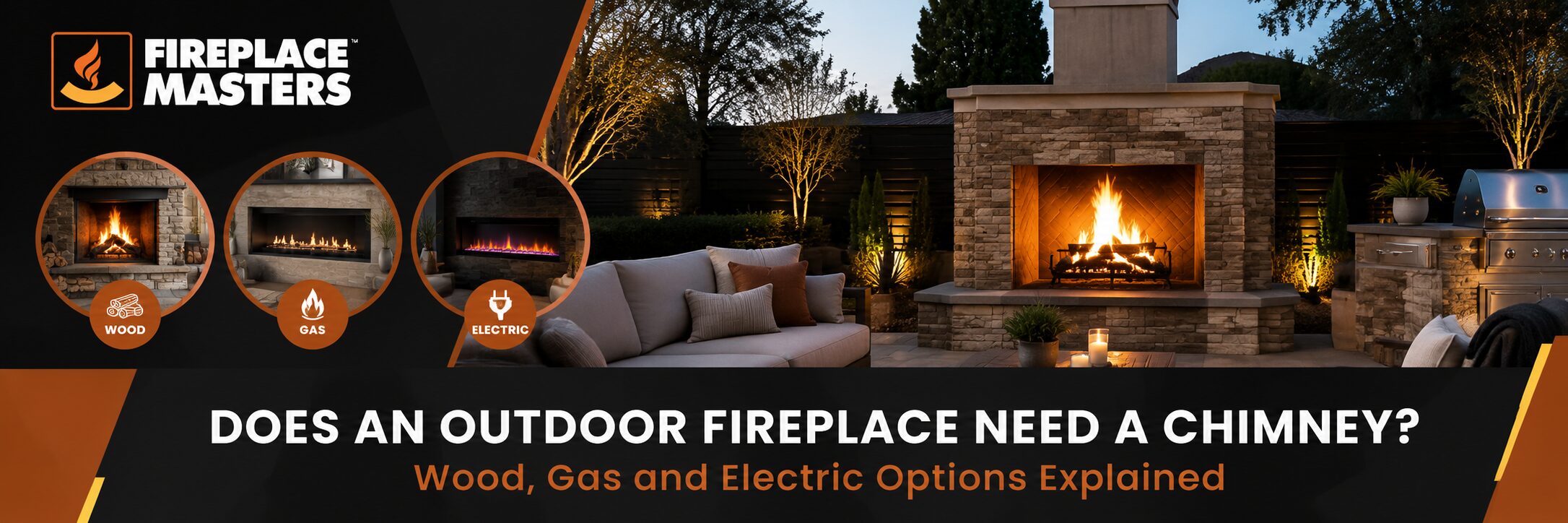
An outdoor fireplace can turn a patio, courtyard or alfresco area into a comfortable place to relax during the cooler months. Before selecting a design, it is important to understand how the appliance will release heat, smoke and combustion gases.
So, does an outdoor fireplace need a chimney? The answer depends mainly on the fuel type and appliance design. Most permanent wood-burning fireplaces require a correctly designed chimney or flue. Some outdoor gas fireplaces need a flue, while others are designed for open-air use without one. Electric fireplaces do not need a chimney because they do not burn fuel.
Why a Chimney or Flue Matters
A chimney or flue carries smoke and hot combustion gases away from the fireplace and releases them in a suitable location.
For a wood outdoor fireplace, the flue also supports the upward airflow needed for effective burning. A poorly planned system may lead to weak draw, smoky operation, soot build-up or smoke moving towards seating areas.
The National Construction Code includes requirements for fireplaces, chimneys and flues. Domestic solid-fuel appliance installations may also need to comply with AS/NZS 2918. The correct setup depends on the appliance, surrounding structure and installation site.
Do Wood Outdoor Fireplaces Need a Chimney?
In most cases, a permanent outdoor wood fireplace needs a chimney or flue. Burning timber creates smoke, particles and combustion gases that must be directed away from people, buildings, roofed areas, windows and nearby properties.
This is especially important when the fireplace is built into an outdoor kitchen, masonry wall or covered entertaining area. A roof, privacy screen or nearby wall can affect how air and smoke move.
A correctly selected flue can help the fire draw properly and reduce the risk of smoke collecting beneath a roof. The flue height and termination point should be assessed for the specific product and property rather than based on a universal measurement.
Open fire pits and portable braziers are different from built-in fireplaces. They may operate without a chimney, but they still require suitable clearances, responsible use and compliance with local fire restrictions. Smoke should not create an unreasonable nuisance for neighbours. The NSW EPA also recommends correct installation, adequate flue performance and regular chimney maintenance to reduce excessive wood smoke.
Does an Outdoor Gas Fireplace Need a Chimney?
An outdoor gas fireplace may or may not need a chimney. It depends on how the appliance was designed, tested and approved.
Some gas fireplaces use a balanced flue or another dedicated venting system. Other products are manufactured for use in a genuinely open outdoor area and do not use a traditional chimney.
The level of enclosure is critical. Adding glazing, blinds, walls, screens or a roof can turn an open alfresco area into a partially enclosed space. This may affect ventilation and make an appliance unsuitable for the new layout. Poor ventilation can also allow combustion gases to collect in occupied areas.
Gasfitting work in NSW must be completed by a licensed gasfitter. The installer should assess the appliance approval, gas supply, ventilation, clearances and flue requirements before installation. NSW guidance also warns that enclosing an appliance designed for outdoor use can create unsafe combustion and carbon monoxide risks.
Do Electric Outdoor Fireplaces Need a Chimney?
An electric outdoor fireplace does not need a chimney or flue because it does not burn wood or gas. It produces no smoke, ash or combustion gases.
This can make an electric model suitable for covered patios, apartments or spaces where a chimney would be difficult to install. Electric fireplaces can also offer simple controls and lower maintenance.
However, not every electric fireplace is made for outdoor use. The model must suit the intended environment and be installed according to the manufacturer’s instructions. Weather exposure, power supply, circuit requirements and clearances must also be considered.
What About Covered Alfresco Areas?
A covered alfresco area sits between a fully open yard and an indoor room, so fireplace planning requires extra care. A unit designed for an uncovered setting may not be suitable beneath a low roof or inside an area surrounded by walls.
Before choosing an outdoor fireplace with chimney, consider:
- Whether the area is open, partly enclosed or likely to be enclosed later
- The distance to eaves, pergolas, timber and other combustible materials
- Nearby doors, windows and ventilation openings
- The manufacturer’s approved installation method
- The proposed route and termination point of the flue
- Access for cleaning, inspection and servicing
- Relevant council, planning and fire restriction requirements
Reviewing these details before ordering can prevent the fireplace from conflicting with the roof, outdoor kitchen or required safety clearances.
Choosing Between Wood, Gas and Electric
The right option depends on the atmosphere you want and the practical conditions of your property.
A wood fireplace offers natural flame and traditional character. It also requires firewood, ash removal, chimney cleaning and more active operation.
Gas provides convenient ignition and controllable heat. Installation may involve gas supply work, ventilation planning and a model-specific flue.
Electric fireplaces are often the simplest choice where combustion is not practical. They do not need a chimney, but they still require an outdoor-suitable model and safe electrical installation.
The best decision should consider the appliance, installation requirements and ongoing maintenance, not appearance alone.
Why Professional Planning Is Important
An outdoor fireplace may affect the hearth, wall construction, roof design, flue route, gas connection, electrical supply and nearby clearances. A site-specific assessment can identify these requirements before building work starts.
This is particularly useful when the fireplace forms part of an outdoor kitchen, covered entertaining area or larger renovation. Early advice can help avoid costly layout changes after materials have been ordered.
Plan Your Outdoor Fireplace with Fireplace Masters
Fireplace Masters can help you compare wood, gas and electric outdoor fireplaces based on your space, preferred style and installation requirements. The family-owned team has supported fireplace projects across Wollongong, the Illawarra and surrounding areas since 1979.
Visit the Albion Park Rail showroom, call 02 4257 5493, or request a quote to discuss an outdoor fireplace for your entertaining area.
The Superior Heating Choice: What Sets Freestanding Wood Fireplaces Apart
Choosing the right heating solution can make a noticeable difference to how comfortable and inviting your...
21 Modern Fireplace Ideas That'll Help You Create the Ultimate Cozy Space
Fireplaces are more than a home feature; they’re a mood, a gathering point, a daily delight....
Essential Fire Safety Guide for Kids
Teaching fire safety to children helps them understand what to do in the event of a...